BAPLIE
About the text files that tell container ships where every box sits.
Still being written.
I have a friend who works as a sailor. He is gone for months, then he turns up with stories: horror, comedy, and, every so often, something technically fascinating. This time it was BAPLIE, an open standard, structured plaintext for a container ship’s bay plan.
The official name is the whole sentence: Bayplan/stowage plan occupied and empty locations. One file is one vessel, one voyage, one port of call.
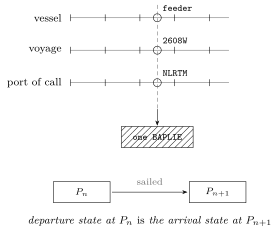
The Ship Message Design Group has kept the guidelines since the early nineties.
As with many great things — COBOL still paying the banks — the 1995 v2.2 is deprecated and still what terminals speak.
The whole ship is a three-number address. 0020204 is bay 02, row 02, starboard, tier 04 in the hold.
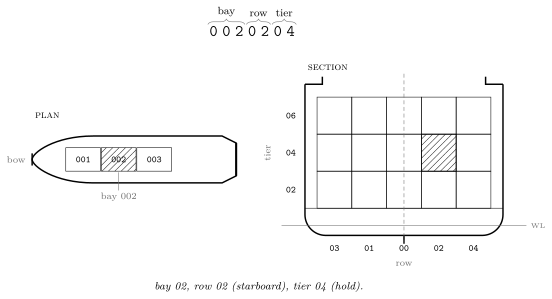
00 is the centerline.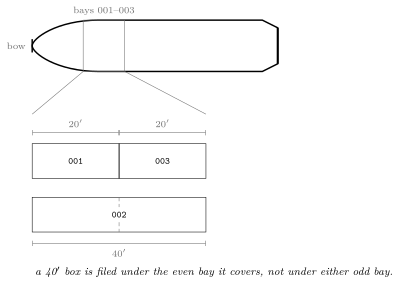
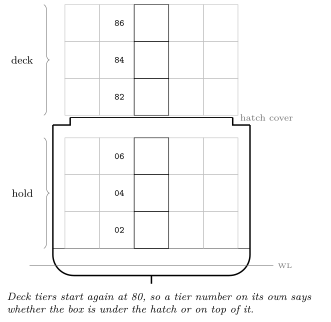
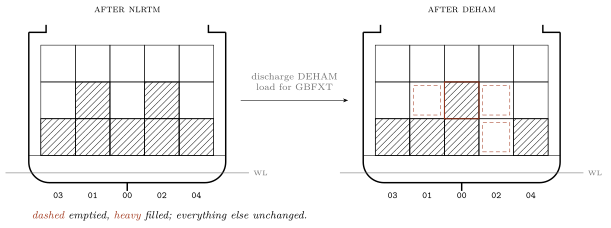
The files below describe a made-up feeder, MV Kinda Neat. The first is after Rotterdam, sixteen boxes on board; the second is the same ship after Hamburg. The little hull is the ship; the grid is the cut. Click a box to see the segments that put it there.
looking forward · port left, starboard right
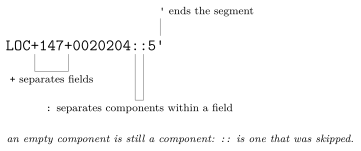
+ splits fields, : splits a field, ' ends a segment. An empty component is still a component: :: is one that was skipped.A 24,000 TEU ship is the same idea, just a lot more apostrophes.
More interesting stuff:
- “Including empties” means empty containers. They still occupy a slot and they still have a tare weight. Empty locations can be sent; SMDG 2.2 says not to.
- Reefers carry a
TMPsegment. Dangerous goods get aDGS. Everyone else is just a number, a weight, and two ports.
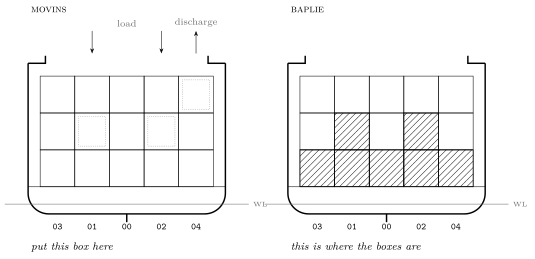
The sibling message is MOVINS: put this box here. BAPLIE is the photograph after you did.